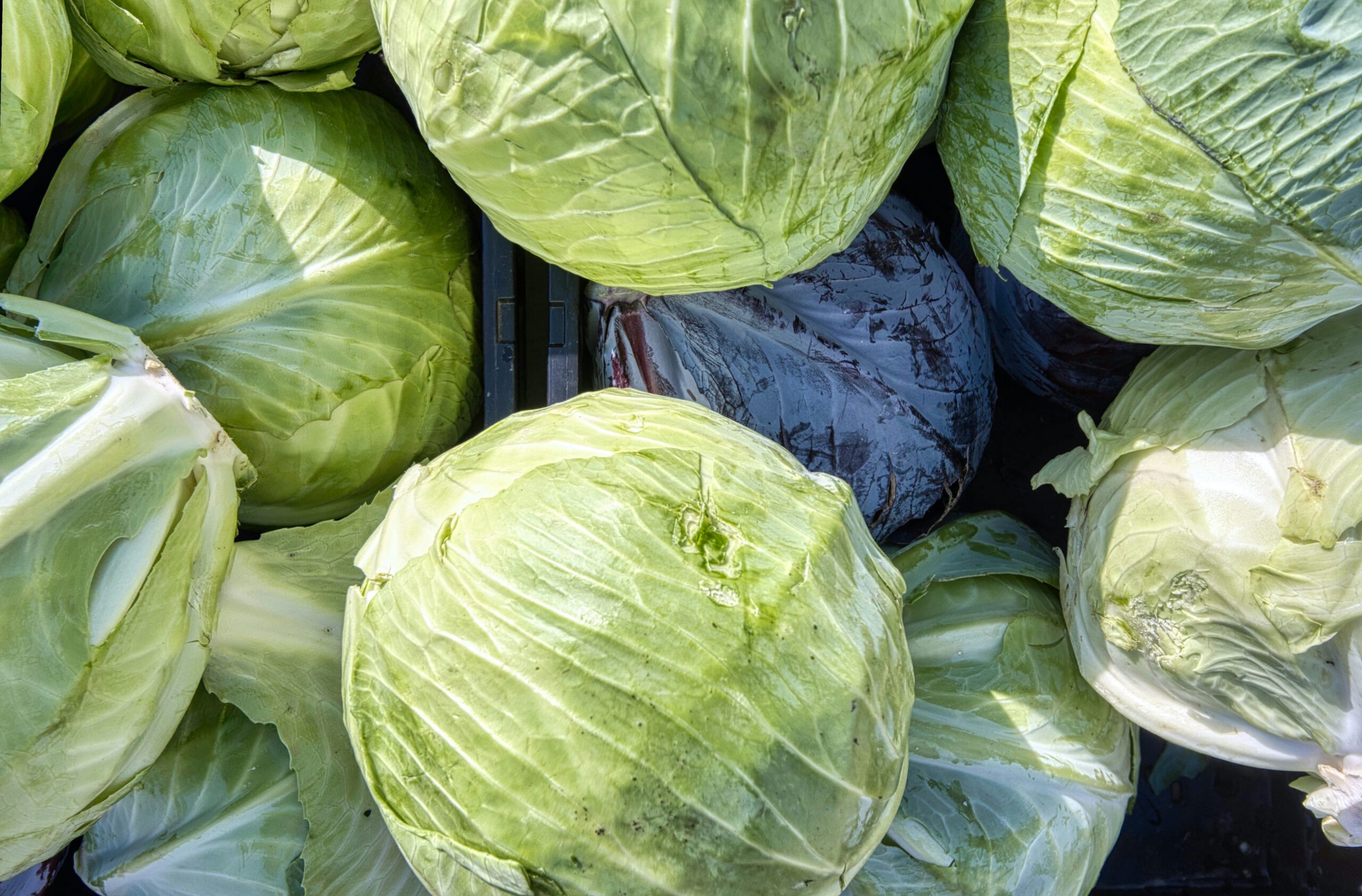
Cabbage might not have the long-standing superfood reputation of kale or blueberries, but in 2026 it’s quietly having a moment, and for good reason! Affordable, versatile, and packed with nutrients, cabbage deserves a closer look.
But when you’re standing in the produce aisle choosing between red (often called purple) and green cabbage, you might be wondering if one is healthier than the other.
The short answer: both are extremely nutritious, but they shine in different ways. If you want to learn more, read on!
A Quick Overview: Same Family, Nutrient Differences
Red and green cabbage both belong to the brassica veggie family, alongside broccoli, kale, and cauliflower. Nutritionally, they share a lot:
- Low in calories
- Contain fiber
- Rich in vitamins like C and K
- Packed with plant compounds linked to disease prevention
Regular cabbage consumption supports digestion, heart health, and immune function thanks to its fiber and antioxidant content.
But despite these similarities, their color difference signals some meaningful nutritional differences, especially when it comes to antioxidants and certain vitamins.
Antioxidants: Where Red Cabbage Clearly Wins
If there’s one category where red cabbage pulls ahead, it’s antioxidants.
Why color matters
The deep purple-red hue comes from anthocyanins, a type of flavonoid also found in blueberries and red grapes. These compounds act as powerful antioxidants, helping to neutralize harmful free radicals in the body.
Green cabbage, by contrast, contains far fewer of these pigments.
What that means for your health
Anthocyanins are linked to:
- Reduced inflammation
- Improved heart health
- Potential protection against certain cancers
- Better brain function and aging support
Studies and nutrition analyses consistently show that red cabbage contains significantly more antioxidants overall.
Bottom line on antioxidants
If your goal is maximizing antioxidant intake, red cabbage is the clear winner.
Vitamin Comparison: A Split Decision
When it comes to vitamins, the story is more balanced.
Vitamin C (Immunity, skin, healing)
- Red cabbage: ~50 mg per cup
- Green cabbage: ~33 mg per cup
Red cabbage delivers significantly more vitamin C, making it a better choice for immune support and collagen production.
Vitamin K (Blood clotting, bone health)
- Green cabbage: ~68 mcg per cup
- Red cabbage: ~34 mcg per cup
Green cabbage contains about double the vitamin K, which is essential for bone health. Vitamin K also helps with blood clotting, which is important whenever you get a cut/scrape!
Vitamin A (Vision, immune function)
- Red cabbage contains much higher levels of vitamin A due to its pigments.
- Green cabbage has only minimal amounts.
Folate (Cell growth, pregnancy health)
- Green cabbage tends to have slightly more folate.
Fiber and Calories
- Both are nearly identical:
- ~20–30 calories per cup
- ~2 grams of fiber
Green cabbage may edge slightly higher in fiber, but the difference is small.
Nutritional Summary: Head-to-Head
| Nutrient Category | Winner | Why |
| Antioxidants | Red | High in anthocyanins |
| Vitamin C | Red | ~50% more per serving |
| Vitamin K | Green | About double the amount |
| Vitamin A | Red | Much higher levels |
| Folate | Green | Slightly higher |
| Fiber | Tie (slight green edge) | Very similar |
Overall: Red cabbage is more nutrient-dense in terms of antioxidants and certain vitamins, while green cabbage dominates in vitamin K.
Taste and Texture: Not Just Nutrition
Health isn’t the only factor. Taste and texture matter a lot, too!
Red cabbage
- Slightly peppery and more robust flavor
- Crunchier texture
- Holds color well (though it can bleed into dishes)
- Great raw or lightly cooked
Green cabbage
- Milder, slightly sweet flavor
- Softer texture when cooked
- More neutral in dishes
These differences explain why each cabbage shows up in different recipes.
Best Use-Cases in the Kitchen
Choosing the “healthier” cabbage may matter less than choosing the right cabbage for the dish.
When to use red cabbage
- Fresh salads and slaws (adds color + crunch)
- Tacos and grain bowls
- Pickling or fermenting (e.g., sauerkraut variations)
- Dishes where visual appeal matters
Its higher antioxidant content also makes it ideal for raw preparations, where nutrients are preserved.
When to use green cabbage
- Soups and stews
- Stir-fries
- Stuffed cabbage rolls
- Classic coleslaw
Green cabbage’s softer texture and mild flavor make it better for comfort foods and cooked dishes.
Does Cooking Change the Nutritional Value?
Yes—sometimes a lot!
- Vitamin C is heat-sensitive, so cooking reduces it
- Fiber and minerals remain stable
- Antioxidants can either decrease or become more bioavailable, depending on the method
Light cooking (like sautéing or steaming) often strikes the best balance between flavor and nutrition.
What About Fermented Cabbage?
Both red and green cabbage are excellent for fermentation (think sauerkraut or kimchi).
Fermenting the cabbage adds:
- Probiotics for gut health
- Enhanced nutrient absorption
- Additional bioactive compounds
Cabbage in any form supports gut bacteria and digestion due to its fiber and prebiotic compounds.
Is One Actually Healthier?
Here’s the honest, evidence-based answer:
- Red cabbage is slightly more “nutrient-dense” overall, thanks to its higher antioxidant levels and vitamin C.
- Green cabbage is not inferior, but it excels in different areas, especially vitamin K and culinary versatility.
In practical terms, the difference isn’t dramatic enough to crown a universal winner.
The Smarter Approach: Don’t Choose, Rotate!
Nutrition experts generally agree on one key principle: variety beats perfection (there’s no such thing!).
Different plant colors provide different phytonutrients. Red cabbage brings anthocyanins and green cabbage contributes other beneficial compounds like glucosinolates and fiber.
So instead of asking:
“Which cabbage is healthier?”
A better question is:
“How can I include both in my diet?”
Final Takeaway
Red vs. green cabbage isn’t a competition, it’s a complementary pairing.
- Choose red cabbage when you want a boost in antioxidants and vibrant color
- Choose green cabbage for cooking versatility and vitamin K
- Eat both regularly to maximize nutritional benefits
At the end of the day, the healthiest cabbage is the one you actually eat. And ideally, you’re eating both!


Leave a Reply
No Comments